
Travel can feel overwhelming, especially when you’re heading somewhere new or far from home. For Muslims planning trips of any distance, learning the proper dua for travelling brings both spiritual comfort and divine protection on your journey.
This guide is for Muslim travellers who want to strengthen their connection with Allah while on the road, whether you’re commuting to work, visiting family, or embarking on a pilgrimage. We’ll walk you through the essential travel duas every Muslim should know and share practical ways to make these prayers a natural part of your travel routine. You’ll also discover the spiritual benefits that come from remembering Allah during your journeys and learn how to avoid common mistakes that can reduce the effectiveness of your duas.
Essential Travel Duas Every Muslim Should Memorise

Dua for Traveling by Plane: Beginning Your Journey
Before stepping out of your home for any trip, whether short or long, reciting the departure dua creates a spiritual foundation for safe travels. The Prophet Muhammad (peace be upon him) would say this prayer when leaving for a journey:
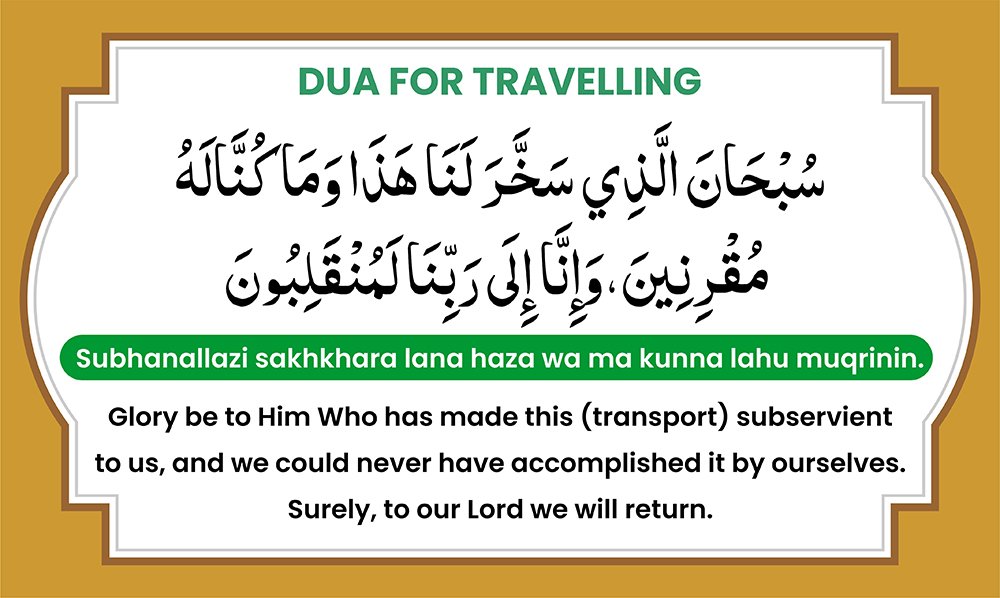
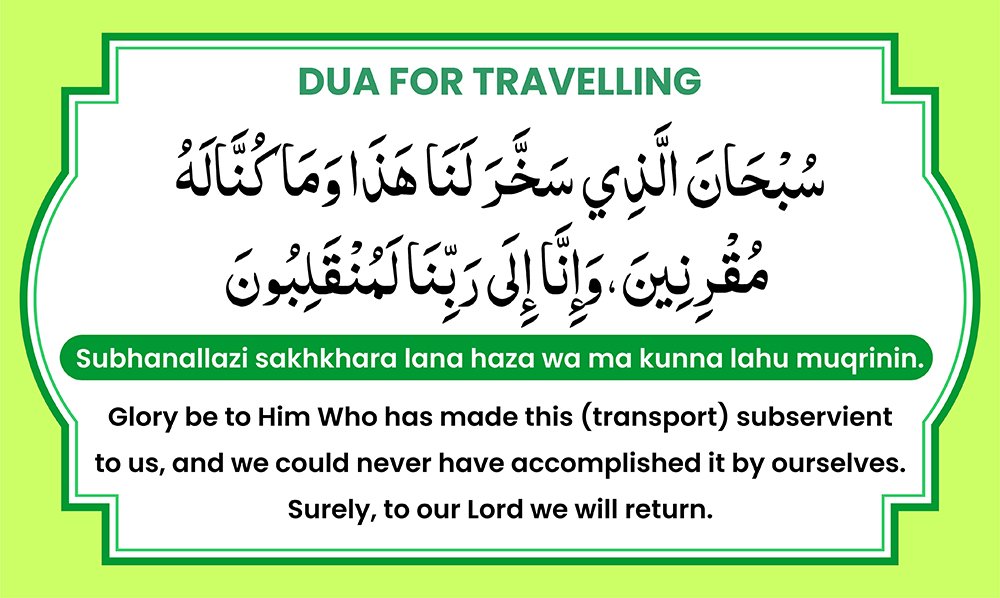
Arabic: سُبْحَانَ الَّذِي سَخَّرَ لَنَا هَذَا وَمَا كُنَّا لَهُ مُقْرِنِينَ وَإِنَّا إِلَى رَبِّنَا لَمُنْقَلِبُونَ
Transliteration: Subhana alladhi sakhkhara lana hadha wa ma kunna lahu muqrineen, wa inna ila rabbina lamunqalibun.
Translation: “Glory be to Him who has placed this (transport) at our service, and we ourselves would not have been capable of this, and to our Lord is our final destiny.”
This powerful supplication acknowledges Allah’s blessing in providing means of transportation and reminds us of our ultimate return to Him. Many Muslims also add: “Allahumma inna nas aluka fi safarina hadha al-birra wa al-taqwa” (O Allah, we ask You for righteousness and piety in this journey of ours).
Safar Ki Dua: Prayer for Safety During Travel
During your journey, especially when facing challenging conditions or feeling anxious about the road ahead, this safety dua provides comfort and divine protection:
Arabic: اللَّهُمَّ إِنِّا نَسْأَلُكَ فِي سَفَرِنَا هَذَا الْبِرَّ وَالتَّقْوَى وَمِنَ الْعَمَلِ مَا تَرْضَى
Transliteration: Allahumma inna nas aluka fi safarina hadha al-birra wa al-taqwa wa min al-amal ma tarda.
Translation: “O Allah, we ask You for righteousness, piety, and deeds that please You during this journey.”
This prayer can be recited multiple times throughout your trip. When boarding planes, entering vehicles, or crossing difficult terrain, repeat this dua with sincere intention. Many travelers find peace in combining this with the seeking refuge prayer: “A’udhu bi kalimat Allah al-tammat min sharri ma khalaq” (I seek refuge in Allah’s perfect words from the evil of what He has created).
Supplication for Protection from Travel Hardships
Travel often brings unexpected challenges – delays, mechanical problems, difficult weather, or getting lost. This comprehensive protection dua shields you from various travel hardships:
Arabic: اللَّهُمَّ إِنَّا نَعُوذُ بِكَ مِنْ وَعْثَاءِ السَّفَرِ وَكَآبَةِ الْمَنْظَرِ وَسُوءِ الْمُنْقَلَبِ
Transliteration: Allahumma inna na’udhu bika min wa’tha al-safar wa ka abat al-mandar wa su al-munqalab.
Translation: “O Allah, we seek refuge in You from the hardships of travel, from having a change of hearts and being in a bad predicament, and an ill fate in property and family.”
This dua specifically addresses three major concerns: physical difficulties during travel, emotional distress from being away from home, and potential problems that might arise while you’re away. The beauty of this supplication lies in its comprehensive coverage of both seen and unseen challenges that travelers might face.
Dua for Returning Home Safely
As you approach your destination or return home, expressing gratitude becomes essential. The return dua combines thankfulness with continued seeking of Allah’s blessings:
Arabic: آيِبُونَ تَائِبُونَ عَابِدُونَ لِرَبِّنَا حَامِدُونَ
Transliteration: Ayibun, ta’ibun, abidun, li rabbina hamidun.
Translation: “We return, repent, worship, and praise our Lord.”
This short but powerful dua encapsulates the spiritual transformation that travel should bring. You’re not just returning physically but also spiritually renewed. Many Muslims also add “Alhamdulillahi alladhi salamana” (All praise belongs to Allah who kept us safe) upon safe arrival.
When you see your hometown or home from a distance, it’s recommended to say “Allahu Akbar” three times, followed by “La ilaha illa Allah wahdahu la sharika lah” and then make personal supplications for your family, community, and continued blessings.
Step-by-Step Guide to Reciting Travel Prayers
Proper Timing for Travel Dua E Safar
Starting your journey with the right timing for travel duas sets the spiritual foundation for your entire trip. The most important moment to recite your travel prayer is when you first board your mode of transportation or begin moving. Whether you’re stepping into a car, boarding a plane, or starting to walk, this initial moment is when you should recite the main travel dua.
Don’t wait until you’re already deep into your journey. The Prophet Muhammad (peace be upon him) would recite travel duas at the very beginning of his travels, establishing this as the proper sunnah timing. If you’re traveling by car, recite the dua as soon as you start the engine and begin moving. For flights, the ideal time is when the plane starts taxiing or takes off, not while you’re still at the gate.
You can also repeat shorter supplications throughout your journey, especially when:
- Crossing bridges or elevated areas
- Entering new cities or regions
- During difficult weather conditions
- When feeling anxious or uncertain
Correct Pronunciation and Arabic Text
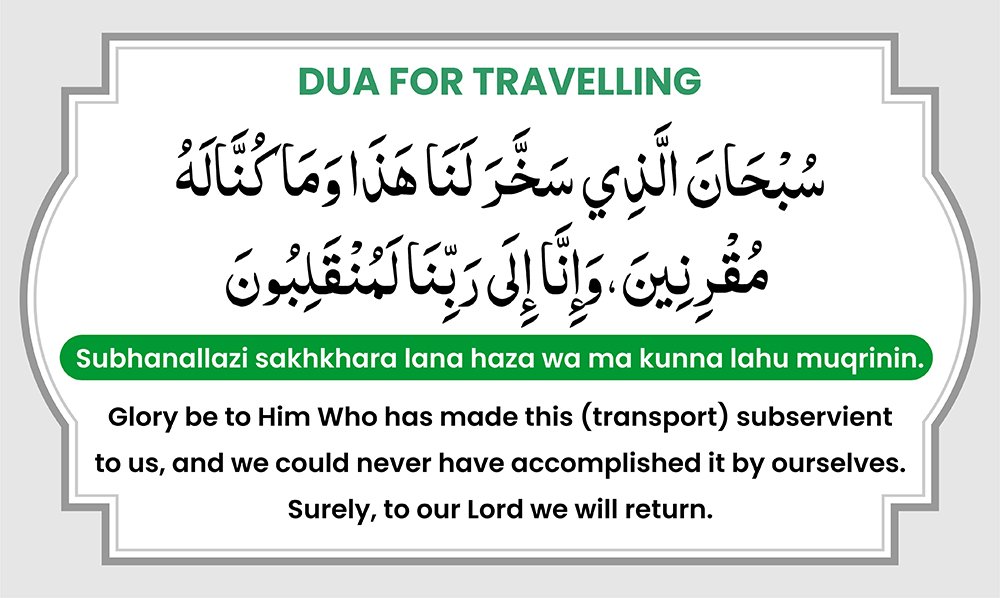
The primary travel dua in Arabic is:
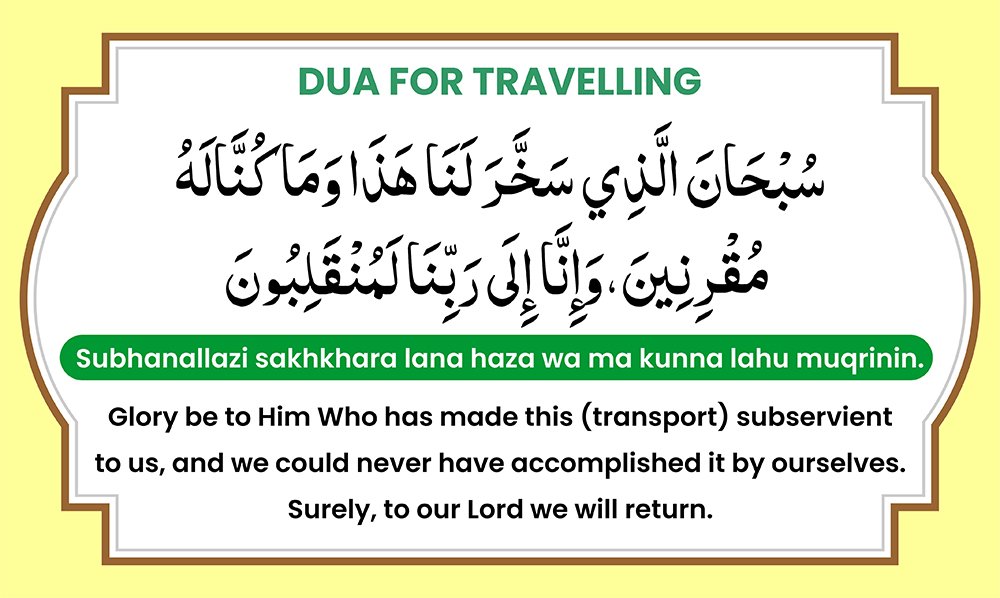
سُبْحَانَ الَّذِي سَخَّرَ لَنَا هَذَا وَمَا كُنَّا لَهُ مُقْرِنِينَ وَإِنَّا إِلَى رَبِّنَا لَمُنقَلِبُونَ
Transliteration: Subhana alladhi sakhkhara lana hadha wa ma kunna lahu muqrineen, wa inna ila rabbina lamunqaliboon.
Pay special attention to these pronunciation keys:
- “Subhana” – emphasize the “sub” with a clear ‘b’ sound
- “Sakhkhara” – the double ‘kh’ should have a throat clearing sound
- “Muqrineen” – roll the ‘r’ slightly and end with a clear ‘n’
- “Lamunqaliboon” – the ‘q’ is pronounced deep in the throat
Practice each word slowly before attempting the full dua. Many Muslims find it helpful to listen to audio recordings from qualified reciters to master the correct pronunciation. The beauty of this prayer lies not just in its meaning but in its melodious Arabic rhythm.
English Translations for Better Understanding
Understanding what you’re saying deepens your connection with the prayer and makes it more meaningful. The English translation of the main travel dua e safar is:
“Glory be to Him who has subjected this (transport) to us, and we could never have accomplished this (by ourselves). And to our Lord, surely, must we return.”
This translation reveals three powerful concepts:
- Gratitude to Allah for making transportation possible
- Humility in recognizing our limitations without divine help
- Remembrance that our final destination is always back to Allah
Breaking down the meaning further:
- “Glory be to Him” acknowledges Allah’s perfect power and wisdom
- “Subjected this to us” refers to how Allah made vehicles, animals, and paths available for human use
- “We could never have accomplished this” reminds us that without Allah’s blessing, we couldn’t travel safely
- “To our Lord must we return” keeps death and the afterlife in perspective during worldly journeys
Some scholars also recommend adding personal supplications in your native language after the Arabic dua, asking Allah for safety, ease in your travels, and success in your journey’s purpose. This combination of traditional Arabic prayer with personal requests creates a comprehensive spiritual preparation for any trip.
Spiritual Benefits of Reciting Travel Duas

Divine Protection Throughout Your Journey
Travel duas act as a spiritual shield that surrounds believers during their journeys. When you recite these sacred prayers, you’re essentially placing yourself under Allah’s protection, asking Him to safeguard you from all forms of harm – whether physical, spiritual, or emotional. The Prophet Muhammad (peace be upon him) emphasized the importance of seeking divine protection while traveling, as journeys can expose us to various risks and uncertainties.
The protective benefits extend beyond just accidents or mishaps. These prayers create a barrier against negative energies, evil influences, and spiritual disturbances that travelers might encounter in unfamiliar places. Many Muslims report feeling a tangible sense of security and divine presence when they consistently recite travel duas before and during their trips.
Peace of Mind for Worried Travelers
Anxiety about travel is incredibly common, whether you’re worried about flight delays, getting lost in a new city, or simply being away from the comfort of home. Travel duas provide remarkable psychological relief by redirecting your focus from worldly concerns to divine trust. When you place your journey in Allah’s hands through sincere prayer, worry naturally transforms into peaceful surrender.
The repetitive nature of these prayers also has a meditative quality that calms the nervous system. Reciting “Bismillahi tawakkaltu ‘ala Allah” (In the name of Allah, I place my trust in Allah) creates a mental anchor that you can return to whenever stress or uncertainty arises during your trip. This spiritual practice helps maintain emotional balance even when travel plans go awry.
Strengthening Connection with Allah During Travel
Travel naturally removes us from our daily routines and familiar spiritual practices. However, travel duas create an opportunity to maintain and even deepen your relationship with Allah while away from home. These prayers serve as regular reminders of your dependence on divine guidance and mercy, keeping your heart connected to the Creator regardless of your physical location.
The act of making du’a during travel also cultivates gratitude for Allah’s countless blessings – the ability to travel, good health, financial means, and safe passage. This conscious acknowledgment strengthens your spiritual awareness and helps you recognize Allah’s hand in every aspect of your journey, from smooth flights to chance encounters with helpful strangers.
Increased Barakah in Your Travel Experience
Barakah, or divine blessing, transforms ordinary experiences into spiritually enriching ones. When you begin your journey with sincere duas, you invite Allah’s blessings into every aspect of your trip. This can manifest in countless ways: finding excellent accommodations at reasonable prices, meeting inspiring people who impact your life, discovering hidden gems that weren’t in your original plans, or simply experiencing moments of profound beauty and gratitude.
Travel duas also help you approach your journey with the right intentions. Instead of traveling purely for pleasure or business, these prayers remind you to seek beneficial experiences, knowledge, and spiritual growth. This shift in mindset attracts divine favor and ensures that your travels contribute positively to your personal development and faith journey.
The barakah extends to practical matters as well – blessed travels often involve fewer complications, better weather, and smoother logistics, allowing you to focus on the meaningful aspects of your journey rather than getting bogged down by minor inconveniences.
Common Mistakes to Avoid When Making Travel Duas
Rushing Through the Recitation
Many travelers treat duas like a quick checkbox on their journey, reciting them at breakneck speed without pause or reflection. This hurried approach strips away the spiritual essence of these sacred words. When you rush through your travel prayers, you miss the opportunity to connect meaningfully with Allah and seek His protection for your journey ahead.
Take your time with each word. The Prophet Muhammad (peace be upon him) emphasized the importance of deliberate, mindful recitation. Allah values the sincerity and contemplation behind your words more than the speed at which you deliver them. Set aside a few quiet minutes before your departure to recite your travel duas with proper pronunciation and genuine intention.
Create a peaceful environment for this ritual. Find a clean, quiet space where you can focus without distractions from family members rushing around or last-minute packing concerns. This mindful approach transforms a simple recitation into a powerful moment of spiritual preparation for your travels.
Forgetting to Make Dua at Key Travel Moments
Travel presents multiple opportunities for prayer that many Muslims overlook. The most common oversight happens at departure – travelers get caught up in logistics and forget to recite the essential travel duas before leaving home. This initial moment holds particular significance as it sets the spiritual tone for your entire journey.
Boarding transportation offers another crucial prayer opportunity. Whether you’re stepping into a car, plane, train, or ship, this transition deserves its own moment of remembrance and supplication. The change from one vehicle to another during connecting flights or transfers also warrants a brief prayer for continued safety.
Arrival at your destination calls for gratitude duas that many forget in their excitement or exhaustion. Thank Allah for safe passage and seek His blessings for your stay. Even temporary stops during long journeys – rest areas, gas stations, or hotels – present chances to reconnect spiritually and ask for continued protection.
Set reminders on your phone or create a travel prayer checklist to help you remember these important moments. Your spiritual practice shouldn’t pause just because you’re away from your usual routine.
Not Understanding the Meaning Behind the Words
Reciting duas in Arabic without grasping their meaning creates a mechanical experience that lacks personal connection. While the Arabic text holds special significance, understanding what you’re actually asking for deepens your relationship with these prayers and makes them more relevant to your specific travel concerns.
Many Muslims memorize the phonetic sounds without learning the English translation. This approach misses the beautiful supplications for protection from travel dangers, requests for easy journeys, and expressions of gratitude for Allah’s countless blessings. When you understand that you’re asking Allah to “make this journey easy for us and fold up the earth for us,” the prayer takes on profound meaning.
Study the translations before your trip. Write them down or save them on your phone for easy reference. Some travelers find it helpful to alternate between Arabic recitation and English reflection, allowing both the traditional form and personal understanding to enrich their prayer experience.
Consider learning one travel dua at a time with its full meaning rather than trying to memorize multiple prayers without comprehension. This approach builds a stronger foundation for your travel worship and creates lasting spiritual habits that will benefit all your future journeys.
Practical Tips for Incorporating Travel Prayers into Your Journey
Creating a Travel Dua Checklist
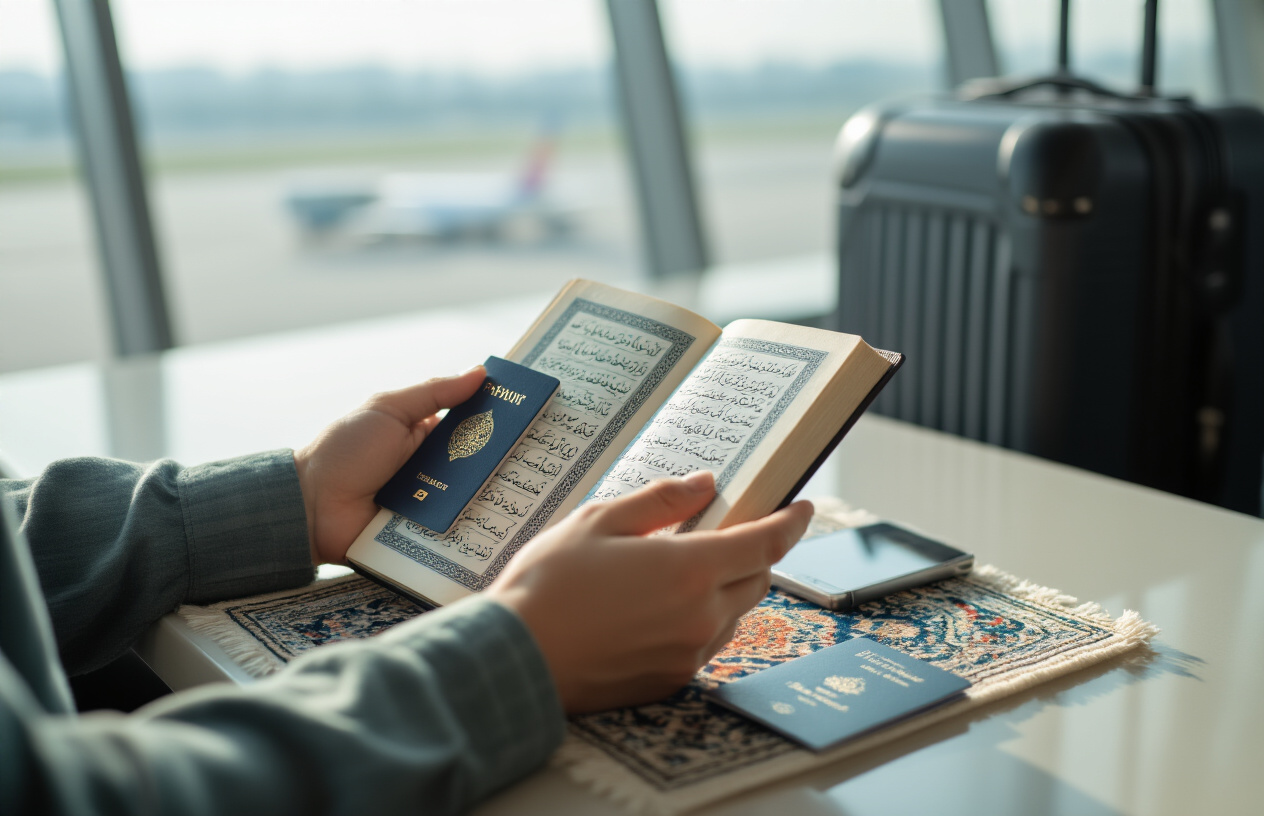
Having a travel dua checklist helps you stay organized and ensures you don’t forget any important prayers during your journey. Start by writing down the main duas you need: the departure prayer (Dua al-Safar), arrival prayer, and prayers for different situations like turbulence or delays.
Create separate sections for different parts of your trip. Include pre-departure duas for your home and family’s protection, in-transit prayers for safety and comfort, and arrival duas for gratitude and blessing your destination. Add specific duas for challenges like bad weather, long delays, or motion sickness.
Keep your checklist simple and practical. Write the transliteration alongside Arabic text if you’re still memorizing. Some travelers prefer small pocket cards, while others use smartphone apps or notes. The key is making it easily accessible when you need it most.
Teaching Family Members the Essential Prayers
Teaching travel duas to your family creates a shared spiritual experience and ensures everyone can participate in seeking Allah’s protection. Start with children by teaching them the basic departure dua through repetition and simple explanations of its meaning.
Break down longer prayers into smaller segments for easier memorization. Use audio recordings to help family members learn correct pronunciation. Many parents find success by reciting duas together during car trips or family walks, making it a natural part of daily routine.
Create engaging learning activities for younger family members. Draw simple illustrations that connect to different parts of the prayer, or make up hand gestures that correspond to key phrases. When children understand what they’re asking Allah for, they become more invested in learning and reciting the duas properly.
Using Technology to Remember Your Duas
Modern technology offers excellent tools for maintaining your travel prayer routine. Download Islamic apps that send prayer reminders based on your travel schedule and time zone changes. Many apps include audio recitations by renowned qaris, helping you perfect your pronunciation.
Set customized alarms on your phone for different travel milestones – boarding time, takeoff, landing, and arrival at your destination. Use voice recording apps to practice duas during quiet moments in airports or rest stops.
GPS-enabled apps can automatically trigger location-based reminders. When you enter an airport, your phone can remind you to recite departure duas. Similarly, arrival at your destination can prompt gratitude prayers. Cloud storage keeps your favorite duas accessible across all devices, ensuring you’re never without your essential prayers.
Making Dua in Different Modes of Transportation
Each mode of transportation presents unique opportunities and challenges for making dua. In cars, the driver and passengers can recite aloud together, creating a spiritually uplifting atmosphere for the entire journey. Utilize traffic stops and rest breaks for longer duas that require more focus.
Air travel requires discretion and timing. Recite quietly during takeoff and landing when emotions naturally turn toward seeking divine protection. Window seats offer perfect moments for reflection and gratitude duas while viewing Allah’s creation from above.
On trains and buses, use the rhythmic motion as a natural backdrop for dhikr and travel prayers. The steady movement can actually enhance concentration and create a meditative state. Ships and boats provide powerful reminders of human dependence on Allah’s mercy, making duas for safe passage across water particularly meaningful.
Adapt your approach based on space and privacy. Crowded transportation might require silent recitation, while private vehicles allow for audible prayer and family participation.
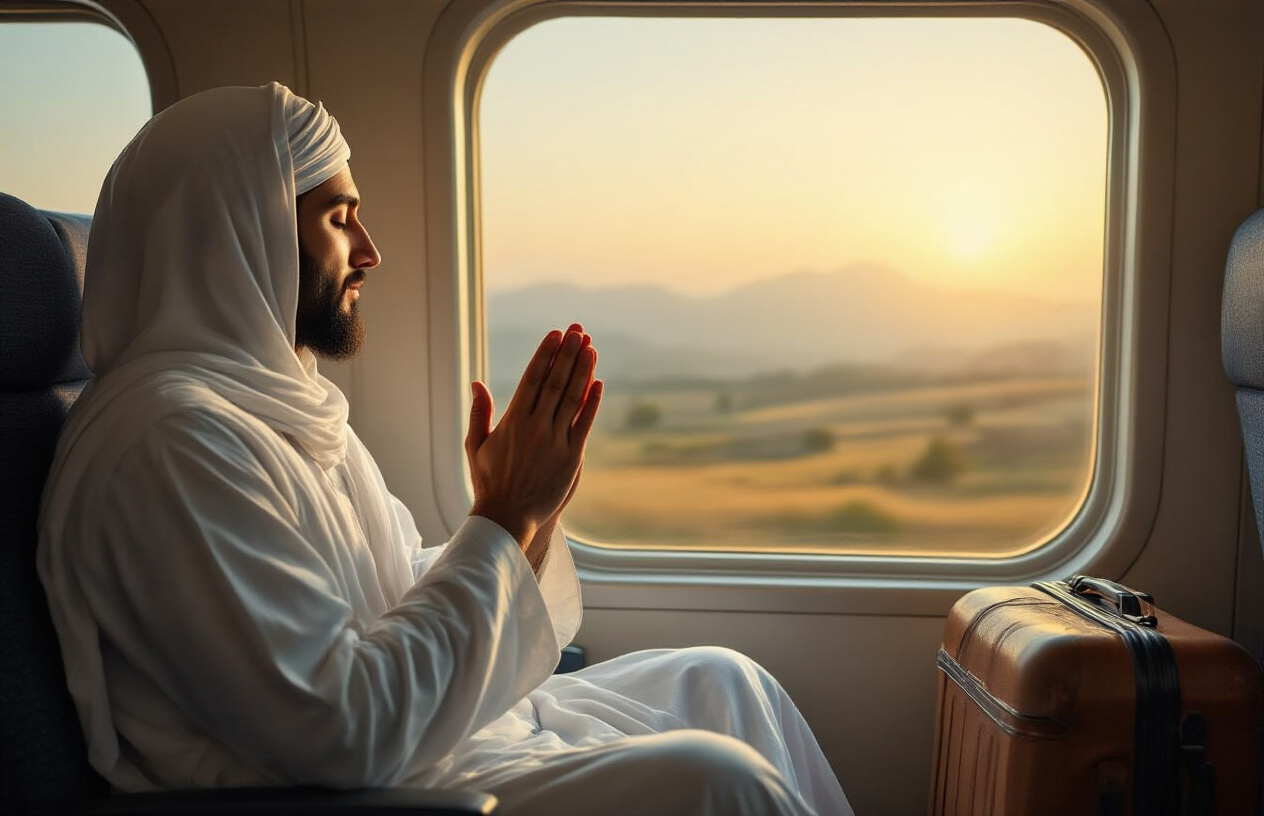
Memorizing and reciting travel duas transforms your journeys from simple trips into meaningful spiritual experiences. These prayers offer protection, peace of mind, and a deeper connection with Allah during your travels. By following the proper recitation steps, understanding their spiritual benefits, and avoiding common mistakes, you create a shield of divine blessing around your journey.
Making travel duas part of your routine doesn’t require dramatic changes to your travel plans. Start with one or two essential prayers and gradually build your practice. Remember, sincerity matters more than perfection – Allah knows your heart and intentions. Keep a small prayer book or use your phone to reference these duas until they become second nature. Your travels will feel more purposeful, protected, and blessed when you begin each journey with these powerful words of faith.