
Best Safar Ki Dua in Arabic, Transliteration & English/Urdu Meaning
Traveling is an important part of life. Whether we travel by car, train, or airplane, Islam teaches us to begin our journey with remembrance of Allah. The Safar Ki Dua is a beautiful masnoon (authentic) prayer from Prophet Muhammad ﷺ that brings safety, peace, and blessings during travel.
In this article, you will find the Arabic text, English and Urdu meanings, transliteration, benefits, and correct time to recite Safar Ki Dua, all in simple and easy language.

What is Safar Ki Dua?
The word Safar means “journey” and Dua means “supplication” or prayer. Safar Ki Dua is a short prayer that the Prophet Muhammad ﷺ used to recite whenever he started a journey.
This dua reminds us that the ability to travel is a blessing from Allah and that we depend on Him for our safety and return. Reciting it makes us mindful, thankful, and spiritually protected during our trip.

Safar Ki Dua in Arabic
Here is the Arabic text of the Safar Ki Dua as mentioned in Hadith:
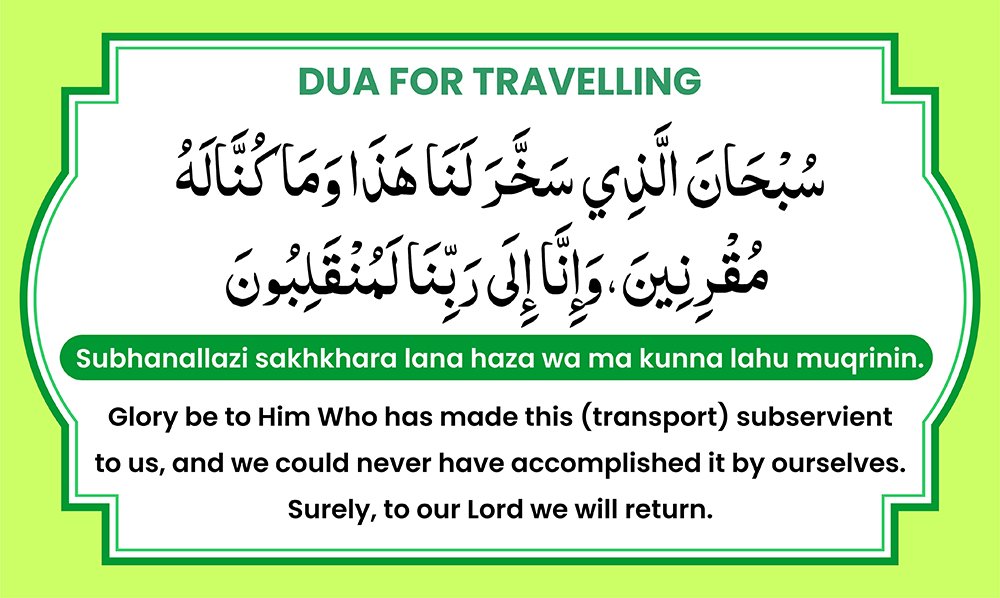
سُبْحَانَ الَّذِي سَخَّرَ لَنَا هَذَا وَمَا كُنَّا لَهُ مُقْرِنِينَ
وَإِنَّا إِلَى رَبِّنَا لَمُنقَلِبُونَ
(Surah Az-Zukhruf 43:13–14)
This verse beautifully praises Allah for giving humans the ability to control means of transport and reminds us that we will all return to Him one day.
Safar Ki Dua Transliteration
Transliteration (Roman English):
Subhanalladhi sakhkhara lana haza wa ma kunna lahu muqrinin, wa inna ila rabbina lamunqalibun.
You can recite this dua before your vehicle starts moving or right after you begin your journey.

Safar Ki Dua In Urdu Meaning and Translation
Urdu Translation
“پاک ہے وہ ذات جس نے ہمارے لیے اس (سواری) کو مسخر کیا، اور ہم اس کو قابو میں نہیں کر سکتے تھے۔ اور بے شک ہم اپنے رب کی طرف لوٹنے والے ہیں۔”
Safar Ki Dua In English Meaning and Translation
“Glory be to Him Who has made this (transport) subservient to us, and we could never have accomplished it by ourselves. Surely, to our Lord we will return.”
This translation explains that the dua is not only for protection but also for humility and gratitude. It teaches that every journey should remind us of our final return to Allah.

When and How to Recite Safar Ki Dua
It is Sunnah to recite this dua whenever you begin a journey — whether short or long, by car, bus, train, or airplane.
Step-by-Step Guide:
- Before Departure: Sit in your vehicle and say “Bismillah.”
- Recite the Dua: Read the Arabic or transliteration clearly and slowly.
- Reflect: Think about Allah’s power and your safety under His protection.
- Repeat when needed: You can also recite it again during travel or when facing difficult situations on the road.
Reciting this dua gives you peace of mind, reduces anxiety, and brings barakah (blessing) in your trip.

Benefits and Importance of Safar Ki Dua
- Protection from harm: This dua seeks Allah’s protection throughout the journey.
- Following Sunnah: It is an act of worship that follows the tradition of Prophet Muhammad ﷺ.
- Remembrance of Allah: Keeps you mindful of Allah’s presence and blessings.
- Gratitude and humility: It reminds us that we travel only by Allah’s permission.
- Peaceful travel: Many people feel spiritual comfort and safety after reciting it.
By reading Safar Ki Dua regularly, you gain both worldly safety and spiritual reward.
Safar Ki Dua for Kids (Simple Version)
Teaching children Islamic duas helps build faith and habit from a young age. Here’s a simple version you can teach kids:
Transliteration for Kids:
Subhanallazi sakhkhara lana haza wa ma kunna lahu muqrinin.
Meaning:
“All praise to Allah who made this vehicle easy for us, and surely, we will return to our Lord.”
You can print this dua and paste it in your car or travel bag so kids can easily memorize it.
Safar Ki Dua Audio (Listen & Learn)
Listening helps in learning the correct pronunciation. You can find authentic Safar Ki Dua audio on Islamic websites or YouTube.
For better memorisation:
- Listen to the dua three times before you travel.
- Repeat it after hearing the recitation.
- Practice with your family before starting any trip.
Hadith Reference for Safar Ki Dua
The Safar Ki Dua is based on authentic Hadith found in Sahih Muslim and Abu Dawood.
According to a narration, when Prophet Muhammad ﷺ mounted his camel for travel, he would say this dua, glorify Allah, and then make further supplications for a blessed journey.
This shows the importance of starting every journey with remembrance and faith.
FAQs about Safar Ki Dua
1. What is the benefit of Safar Ki Dua?
It brings safety, peace, and blessings during travel and reminds us of Allah’s mercy.
2. Can we recite Safar Ki Dua for car or plane travel?
Yes, it can be recited for any type of journey — car, train, plane, or even walking.
3. Is there a dua after reaching destination?
Yes, when returning home or completing the journey, recite “Aayiboona, ta’iboon, ‘aabidoona, li rabbina haamidoon.”
4. Can kids learn Safar Ki Dua?
Yes, children can easily memorize a shorter version with meaning.
5. Where is this dua found in the Quran?
It appears in Surah Az-Zukhruf, verses 13–14, and was also recited by Prophet Muhammad ﷺ.
Downloadable Resources
You can download free Safar Ki Dua images and JPGs in Arabic, Urdu, and English. These are perfect for printing and sharing on social media.
Make sure to include the dua in your daily life and teach it to your family and friends.
Traveling is a moment of trust — we plan our journey, but safety comes only from Allah. The Safar Ki Dua connects your heart to Allah before you begin.
Recite it every time you travel, teach it to your children, and share it with others. It is a simple act of faith that fills your journey with protection, peace, and remembrance of the Creator.